











Key Takeaways
- What security cameras are best for construction sites? Cellular-connected, solar-powered cameras needing no hardwired power or internet. PTZ covers perimeters, LPR the gate, domes the stairwells.
- Do construction sites need security cameras? Not by Connecticut statute, but increasingly by GC agreement and builders risk policy. Footage also anchors any liability defense.
- How do temporary construction site cameras work without power or internet? A solar panel charges a battery running the camera and a 4G/5G modem. Video uploads over cellular, with SD backup if the signal drops.
- What is the most stolen item on Connecticut construction sites? Copper wire and pipe, especially along the I-95 and Route 1 corridors, then tools, generators, and diesel fuel.
- How much do construction site security cameras cost in Connecticut? A single installed cellular solar camera runs $1,200 to $2,500, a four-camera package $5,000 to $10,000, and towers $500 to $1,500 monthly to rent.
Construction site theft is a billion-dollar problem, and nobody can say exactly how big. Estimates run from roughly $300 million to over $1 billion a year in the United States, and the range exists because most job site theft goes unreported. The National Insurance Crime Bureau tracks commercial heavy equipment theft, and recovery rates stay low.
Copper, lumber, tools, fuel, and small machinery regularly walk off unmonitored Connecticut sites, usually between Friday afternoon and Monday morning. AST builds security services around that window, because a job site is most exposed when nobody is there.
Theft is half the exposure. A trespasser hurt on an open site, a dispute over the slab’s condition on a given date, a claim about materials that never arrived: all of it turns on documentation. AST’s contractor security solutions exist to make sure it is there.
Why Connecticut Construction Sites Need Security Cameras
Construction sites need cameras for three reasons: deterring theft and providing evidence, defending against liability after unauthorized access, and documenting site conditions.
Theft deterrence and documentation. Visible cameras are the most effective deterrent on an open site because most job site theft is opportunistic. Copper is the recurring target along the I-95 corridor, where a crew can strip active runs overnight and be out of state before the supervisor arrives. Footage is what police act on and what the insurer needs.
Liability protection. A trespasser injured on an unmonitored site is a serious liability event, and the defense depends on showing the site was secured and the entry unauthorized. Footage of posted warnings, fencing, and the entry itself beats an affidavit.
Project monitoring. Cameras produce time-lapse progress documentation, dated evidence for change-order disputes, and remote visibility for a PM covering four sites at once.
Types of Construction Site Security Camera Systems
Wireless Cellular Cameras, the Connecticut Job Site Standard
Most Connecticut job sites have no hardwired power and no internet on day one, and waiting for either is not an option when excavation starts Monday. Cellular cameras solve it: 4G/5G LTE for connectivity, solar for power, no electrician, no service drop, setup in under an hour per camera. Footage streams to the cloud for the PM, superintendent, and owner on any device. These temporary security cameras are the most commonly deployed solution on active Connecticut sites.
Solar-Powered Cameras for Remote Connecticut Sites
Cellular coverage is not uniform statewide. Sites in Litchfield County and rural New Haven County sit in weak-signal pockets where cloud-first cameras struggle. Solar cameras with onboard SD recording store footage locally instead.
Trailer-Mounted Mobile Camera Towers
A mobile tower is self-contained: camera mast, solar array, battery backup, cellular modem, and floodlights on a towable trailer. It moves as the project moves, which suits Connecticut infrastructure work, highway work zones, and phased developments. AST rents and sells them.
Permanent Systems for Completed Facilities
When construction wraps, the temporary cameras come down, and a permanent IP system goes in. AST designs both phases together, which a camera rental company cannot do: temporary surveillance during the build, the permanent construction security system after occupancy, and no lapse between them.
Where to Place Security Cameras on a Connecticut Job Site
Six placements cover most sites:
- Entrance and exit gates. Every person and vehicle documented, with LPR at the main gate on high-value projects.
- Equipment staging and storage. Equipment parking, fuel, generators, and laydown are the primary theft targets.
- Tool and material containers. Interior and exterior coverage; motion alerts armed after hours.
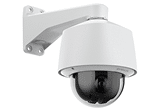
- Perimeter fence line. Long-range or PTZ cameras catch breaches before anyone reaches the staging area.
- High-value material areas. Active copper runs, lumber deliveries, staged HVAC equipment.
- Elevator shafts and stairwells. Upper floors on multi-story Connecticut projects draw vandalism.
Construction Site Surveillance: Remote Monitoring Options
Cameras record. Monitoring turns a recording into an intervention, and there are two ways to do it.
Self-monitoring. The PM or superintendent gets motion alerts on a mobile app and reviews clips when something triggers. It costs almost nothing, and the failure mode is predictable: after two weeks of deer, headlights, and blowing tarps setting off 2 a.m. alerts, nobody is checking.
AST-managed remote monitoring. A UL-listed central station watches live video events 24/7. Operators verify the threat first, cutting false police dispatches substantially. When it is real, the response runs in parallel: speaker intervention on site (“this site is monitored, leave now”), police dispatch, owner notification, and a documentation package after. AST’s remote video surveillance monitoring is built for this.
On municipal, federal, and CTDOT work, professional construction site monitoring often satisfies the contract’s security requirement. Self-monitoring does not.
Connecticut Construction Site Security, Compliance, and Insurance
Regulatory context: Private construction in Connecticut falls under federal OSHA, while CONN-OSHA covers state and municipal public-sector work. Neither mandates cameras, but both reward what a plaintiff’s attorney will probe: documented evidence that the site was secured.
General contractor requirements: Site camera clauses are now standard in many Connecticut subcontractor agreements, particularly in Stamford, Hartford, and New Haven. Price the requirement in rather than discover it at execution.
Insurance and bonding: Builders risk carriers increasingly condition coverage on active site monitoring in higher-risk locations, and a documented program affects both premium and how a claim is handled. The same records support bonding capacity and license renewals.
How Much Do Construction Site Security Cameras Cost in Connecticut?
Cost depends on camera count, cellular versus hardwired, solar versus shore power, tower versus fixed mount, storage retention, and rental versus purchase.
| Option | Connecticut cost |
| Single cellular solar camera, purchased and installed | $1,200 to $2,500 |
| Four-camera wireless site package | $5,000 to $10,000 |
| Mobile camera tower, purchase | $8,000 to $20,000 |
| Mobile camera tower, rental | $500 to $1,500 per month |
| Eight-camera wired permanent system, post-construction | $8,000 to $18,000 |
| Remote monitoring | $200 to $600 per month |
Most Connecticut contractors carry site camera costs in project overhead. One stolen skid steer, one copper strip, or one trespassing injury claim costs more than the entire system. Rental suits a single-project contractor; purchase wins once a GC runs three or more sites a year. AST provides free site security assessments for Connecticut contractors.
FAQ: Construction Site Security Cameras in Connecticut
What security cameras are best for construction sites?
The best cameras for most Connecticut construction sites are cellular-connected, solar-powered units that work without hardwired power or internet. PTZ cameras cover large perimeters, LPR cameras document plates at gate entries, and fixed domes in stairwells and elevator shafts deter vandalism on multi-story projects.
Do Connecticut construction sites need security cameras?
Connecticut law does not mandate security cameras, but general contractor agreements and builders risk policies increasingly require them. Documented camera coverage is central to liability defense after a trespassing injury, and many CTDOT and municipal projects specify active site monitoring.
How do temporary construction site cameras work without power or internet?
Solar panels charge onboard batteries that power the camera and a cellular modem. The camera connects over 4G/5G LTE, the same network a smartphone uses. Footage transmits to cloud storage in real time for any authorized user, with local SD storage as backup if cellular drops.
What is most commonly stolen from Connecticut construction sites?
Copper wire and pipe are the primary targets on Connecticut job sites, particularly along the I-95 and Route 1 corridors. Power tools, generators, diesel fuel, and small machinery follow, and thieves target staged HVAC and roofing materials during delivery windows.
How much do construction site security cameras cost in Connecticut?
A single cellular solar camera installed runs $1,200 to $2,500, and a four-camera wireless package $5,000 to $10,000. Mobile camera towers cost $8,000 to $20,000 to purchase or $500 to $1,500 per month to rent. Remote monitoring adds $200 to $600 per month by camera count.
Does AST install security cameras on Connecticut construction sites?
Yes. Advanced Security Technologies installs temporary wireless job site camera systems and permanent building security systems for Connecticut contractors, serving sites across New Haven County, Fairfield County, Hartford County, and all of Connecticut from its Shelton headquarters.
Get a Job Site Security Assessment
From a single-phase residential development in New Haven County to a multi-building project in Stamford, AST designs and installs construction site security camera systems that protect equipment, reduce liability exposure, and keep schedules on track. One Connecticut team provides temporary surveillance and permanent building security, so nothing falls through at handoff. Get a free job site security assessment before the next phase starts.
AST serves New Haven, Fairfield, and Hartford counties, the I-95 corridor, CTDOT project areas, and all of Connecticut.