









Key Takeaways
- E-cigs can trigger smoke detectors, depending on the type of detector and the distance from the device.
- Most triggers happen with photoelectric smoke detectors, which react to vapor density.
- E-cig aerosol is a mixture of particles that detectors can detect.
- Vaping indoors increases the risk of false alarms, evacuations, and system resets.
- Clear no-vaping rules and well-placed detectors reduce downtime and tenant conflict.
- Building owners benefit from pairing detectors with strong signage, camera coverage, and policy enforcement.
- A quick consultation can help tighten your fire-safety plan and reduce preventable alarms.
If you’ve managed a building for long enough, you’ve probably noticed that people vape in places they shouldn’t. Doesn’t matter how many “No Smoking” signs you put up: someone will push their luck with a mint-flavored cloud in the elevator, a bathroom stall, or the stairwell.
For years, many assumed e-cigarettes (e-cigs) were harmless from a building-safety standpoint. The logic went: if you can’t smell it, the smoke detector won’t care.
However, today’s detectors respond to particles instead of scents. And e-cig vapors carry many dense, reflective droplets that behave very much like smoke when they drift into a sensor.
We’ve put this guide together to help building owners understand how e-cigs and vape smoke detectors interact and what they can do to reduce avoidable disruptions.
Can E-Cigs Set Off Smoke Detectors?
Short answer: yes, they can.
Long answer: It depends on the detector and how much vapor is in the air.
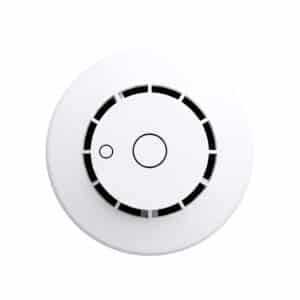
Most commercial buildings use photoelectric smoke detectors with a simple light sensor. When particles scatter the light beam inside the chamber, the detector reacts.
E-cig vapor is basically a cloud of microscopic droplets made from propylene glycol, vegetable glycerin, nicotine, and flavoring agents. These droplets scatter light extremely well. If enough vapor reaches the sensor, the detector reacts just as it would with smoke from any other source.
Ionization detectors are less sensitive to vapor, but they’re rarely used as the primary detector in modern buildings.
Essentially, e-cig vapor is dense, particle-heavy, and absolutely capable of tripping the system.
Why Does E-Cig Vapor Trigger Photoelectric Smoke Detectors?
Photoelectric detectors monitor a narrow light beam inside the sensing chamber. Once something drifts through and bends the beam, the device interprets it as smoke. E-cig vapor happens to be exactly the kind of particle cloud that gets the detector’s attention.
1) E-Cig Vapor Lingers for a Long Time
The aerosol from a vape tends to linger in the air, especially in compact, poorly ventilated rooms. Bathrooms, elevators, stairwells, and similar spots can trap the vapor long enough for it to rise and reach the detector.
2) Propylene Glycol and Glycerin Interact Strongly with the Light Beam
Propylene glycol and glycerin both bend light in a way that photoelectric sensors can quickly detect. It’s the same reason fog machines can set off smoke alarms almost immediately.
3) Enclosed Areas Make Vapor Behave Like Smoke
Spaces like bathrooms, elevators, stairwells, and closets trap the vapor, allowing it to build up and move toward the detector instead of dispersing.
4) A Close-Range Exhale Can Overwhelm the Chamber
A heavy puff near the detector sends a concentrated cloud of particles straight into the sensing area. Once this happens, the device reacts exactly as it’s designed to.
Do E-Cigs Leave Residue on Smoke Detectors?
They do, and it’s one of the lesser-known problems with indoor vaping.
Aerosol from vape clouds can leave a thin film on nearby surfaces. Smoke detectors are especially vulnerable because of how their sensors are designed. The interior components need to be clean to function properly.
Over Time, Sensors Start Misfiring
A detector clogged with residue can become sluggish or even unresponsive during a real smoke event. Unless you’re testing the system regularly, you may not realize there’s a problem until it’s too late.
It Shortens the Life of the Device
Most smoke detectors are designed to last 8 to 10 years, but that assumes normal conditions. Exposure to vapor can significantly reduce their lifespan.
Cleaning helps extend the device’s life, but it doesn’t solve the root issue. If detectors are regularly exposed to vape aerosol, you’re dealing with faster degradation and more false alarms.
How Common Are Vape-Related False Alarms in Buildings
More common than most owners realize.
False alarms triggered by vaping are squeezing fire‑safety budgets, irritating tenants, and drawing scrutiny from fire officials.
According to a 2023 report from the U.S. Fire Administration (USFA), 7.8 % of all fire‑department responses in 2023 were classified as false alarms or false calls. Put another way, nearly 1 out of every 13 fire-department responses nationwide stems from a system reacting to harmless particles, environmental changes, or human behavior.
E-cigs and smoke detectors are behind many of those calls in places like:
- apartment hallways
- office bathrooms
- schools
- hotels
- shopping centers
- dorms and student housing
- gyms, locker rooms, and staff break areas
Repeated false alarms create significant operational, financial, and safety issues for property managers and tenants alike.
1) Operational Disruption
Evacuating a building, even briefly, disrupts operations, inconveniences residents, and delays everything from meetings to room turnover.
2) Costly Fire-Department Responses
Some jurisdictions bill for repeated false alarms, particularly when a building becomes a frequent offender. Usually, these fines add up quickly. Repeat calls can also trigger mandatory inspections.
3) Increased Scrutiny for Your Building
Once your property is flagged as “high alarm frequency,” you’ll face stricter oversight, more inspections, and closer monitoring from fire-safety authorities.
4) Alarm Fatigue Among Occupants
After tenants experience multiple false alarms, they stop reacting quickly. Studies show people delay evacuation when they assume “it’s just another false alarm.”
How Can Building Owners Cut Down on Vape-Triggered Alarms?
You don’t need a complete overhaul to reduce vape-related alarms. A few focused steps can drastically lower false alerts and keep your fire-safety system working correctly.
1) Clear No-Vaping Signs
Most people only follow what they see. Put clear signage in all high-risk areas:
- Elevator lobbies
- Stairwell doors
- Bathroom entrances
- Hallways and common lounges
Make sure the signs mention that vaping can set off the alarm. Many people don’t realize that’s even possible.
2) Strong Lease or Workplace Policies
Vaping rules should appear in every lease, onboarding packet, tenant handbook, and break-room policy board. Spell out expectations and outline the consequences in plain language.
3) Cameras Near High-Risk Zones
You don’t need to point cameras inside private spaces, but placing them at entrances to bathrooms, stairwells, and other small rooms discourages vaping in those areas.
Cameras also help verify activity in the event of a false alarm. If a detector goes off at 2:45 PM in the stairwell and the camera shows someone entering right before it is triggered, you have context.
4) Staff Training
Your maintenance and security teams are your early warning system. Teaching them to recognize vape behavior, such as lingering sweet smells, visible cloud trails, or warm spots near vents, can help you spot problems before they create system-wide disruptions.
5) Adjusted Detector Placement
A licensed fire contractor can evaluate whether certain units are too close to high-risk locations or ventilation dead zones. Sometimes, small adjustments (still fully code-compliant) reduce nuisance triggers without affecting fire protection.
Schedule Your Consultation Today!
The connection between e-cigs and smoke detectors is one every building owner should take seriously.
However, you don’t need sweeping policy changes or specific system replacements, as long as you set up a plan to acknowledge how people use yminoruilding and how to protect it from such everyday behavior.
At Advanced Security Technologies, we help building owners stay ahead of false alarms and system wear by aligning their fire-safety setup with real-world use. If you’d like help evaluating your detectors, addressing problem areas, or putting a no-vaping strategy in place, we can walk you through it step by step.
Reach out to book your consultation today!
Frequently Asked Questions:
1) Can e-cigs set off smoke detectors?
Yes. The vapor carries enough particles to scatter the light inside photoelectric detectors. If the cloud is dense or close to the device, the alarm reacts the same way it does with regular smoke.
2) Do e-cigs and smoke detectors interact differently in small rooms versus open areas?
They do. Small rooms like bathrooms, stairwells, and elevators trap vapor longer, increasing the chance of a false alarm. In open areas, the aerosol disperses faster, so the risk is lower, but not zero.
3) Can upgrading my fire-safety system reduce issues caused by e-cigs and smoke detectors?
Sometimes. You may not need a complete replacement, but a licensed fire contractor can evaluate whether updated sensors, better placement, or added ventilation can help reduce vape-related false alarms.