








Key Takeaways
- What security systems do warehouses use? Video surveillance, access control at personnel and dock doors, intrusion detection with UL-listed monitoring, and dock vendor management.
- What cameras are best for large warehouse spaces? Fisheye at aisle intersections, since one covers what three or four domes would. PTZ for open floor, LPR at dock bays, IR overnight.
- How do warehouses prevent internal theft? Zone-based access control, dock credentials tied to appointment windows, access logs reconciled against the WMS, cameras on high-shrink zones.
- Does a warehouse need access control? Yes. It limits who can access high-value zones, creates an audit trail tied to a named credential, and supports OSHA compliance in battery-charging areas.
- How much does a warehouse security system cost in Connecticut? Under 50,000 sq ft runs $15,000 to $35,000, a 50,000 to 200,000 sq ft DC $35,000 to $100,000, and large fulfillment centers $100,000 to $300,000 or more.
A Connecticut distribution center holds more value on the floor on a given Tuesday than most office buildings hold in a year, and it is only as secure as whoever last propped a dock door open.
Verisk CargoNet put 2025 cargo theft losses at an estimated $725 million across North America, counting only reported incidents. It does not count internal shrink, the harder problem, because nobody files a police report for inventory that was never on the shelf. AST designs video surveillance services for that reality.
The Port of New Haven moves containers, petroleum, and general cargo, and the I-91 corridor carries dense grocery and pharmaceutical distribution. Those facilities need access control systems that understand a dock door is not an office door.
What Security Systems Do Warehouses and Distribution Centers Use?
A complete warehouse security system integrates five layers: video surveillance, access control, intrusion detection with UL-listed monitoring, remote video monitoring, and dock vendor management. One platform, not five products.
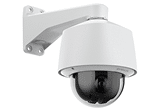
Video surveillance: IP cameras on dock doors, aisles, and pick zones, with fisheye for open floor, PTZ for perimeters, and analytics for forklift zones.
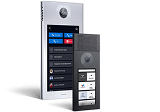
Access control: Credentialed entry at personnel doors, dock control limiting carriers to specific doors inside appointment windows, restricted zones for server rooms, cages, and cash offices.
Intrusion detection: Perimeter sensors, contacts on every opening, 24/7 UL-listed monitoring.
Remote video monitoring: Operator verification before dispatch, speaker intervention, incident packages for police and insurers.
Vendor management: Driver ID verification, dock appointment integration, badges with zone and time limits.
Warehouse Security Camera Placement: Where Every Camera Counts
Warehouse surveillance cameras fail for two reasons: too few covering too much square footage, or the right count aimed at the wrong zones.
Loading Docks and Shipping/Receiving
The highest-risk zone in the building. Every pallet passes through here, and so does the most common form of warehouse theft: load manipulation, short-shipping, and quiet collusion between a driver and a dock worker. Coverage needs an overhead camera on the bay, a second angle low enough to read pallet labels and see hand activity, and an exterior camera with LPR, time-synced to the WMS so footage pulls against a shipment record.
Warehouse Floor and Pick/Pack Areas
Fisheye cameras at aisle intersections are the efficiency play. One covers what three or four domes would across long rack aisles, changing the economics on a 150,000-square-foot floor. Pick zone coverage doubles as order-dispute documentation.
Receiving and Returns Processing
Returns are a recurring source of internal theft and fraud, because a returned item sits in a gap between two records. Give it dedicated product-level coverage.
High-Value Inventory Storage
Cameras and access control together: only authorized personnel enter, the camera records who handled what, and every event logs with a timestamp for WMS reconciliation.
Perimeter and Parking Lot
LPR at every vehicle entry and exit, perimeter cameras along the fence line to catch approaches before a breach, and coverage of the employee lot, where internal theft exits the building.
Access Control for Connecticut Warehouses and Distribution Centers
Uncontrolled access is the main enabler of internal theft, and vendor movement without logging turns every dispute into a one-word argument. OSHA also sets requirements around battery charging, where controlled access shows the zone is managed.
Personnel Entrance Control
Every employee credentials in and out at shift change, producing a real-time headcount for emergency roll call and killing buddy-punching. Terminated employees are deactivated from the console in seconds.
Dock Door Access Control
The single most effective tool against organized cargo theft. Dock credentials authorize a specific carrier to a specific door during a specific appointment window, integrated with dock scheduling and wired so the strike only releases for a valid credential. An off-schedule driver does not get in, and the attempt is logged.
Restricted Zone Access
The cage uses biometric or multi-factor authentication plus cameras; the cash office card plus PIN with an audit log; and IT rooms may have documented access requirements under PCI or SOC 2. AST deploys Alocity biometric readers and HID platforms here.
Contractor and Vendor Access
Temporary credentials issued for an authorized work window, expiring automatically; every event logged by timestamp and door.
Warehouse Intrusion Detection and After-Hours Alarm Monitoring
Warehouses lose copper pipe, pallet jacks, and full pallets of freight at night and on weekends. DMP intrusion panels are the integrator-grade standard AST deploys, zoned across dock doors, personnel entrances, perimeter breaches, and interior motion.
Monitoring makes the panel useful. AST’s alarm monitoring services run through a UL-listed central station 24/7, and pairing alarm with video lets an operator pull live footage the moment a zone trips. Verifying before dispatch means police respond to real intrusions and the facility stops paying false alarm fees.
Connecticut Distribution Center and Fulfillment Center Security
Connecticut’s logistics geography concentrates risk in four places.
Port of New Haven: Container, petroleum, and general cargo put New Haven and Bridgeport warehousing in the path of crews targeting freight at rest.
I-91 corridor: Cromwell, Wallingford, Cheshire, and Meriden hold the state’s densest distribution run, and pharma freight there carries theft risk out of proportion to its pallet count.
I-84 corridor: Waterbury, Southbury, and Danbury handle regional distribution and cold storage, where a power or door-control failure becomes product loss.
I-95 corridor: Bridgeport, Norwalk, and Stamford run last-mile fulfillment into the New York metro market.
Facilities under national carrier contracts face corporate standards requiring integrated camera, access control, and alarm with documented commissioning. AST builds fulfillment center security to that standard.
How Much Does a Warehouse Security System Cost in Connecticut?
Cost tracks square footage and ceiling height, dock door count, access control points, fence line length, alarm zones, and managed services versus break/fix.
| Facility | Connecticut cost |
| Small warehouse, under 50,000 sq ft, 8 to 16 cameras, basic access control | $15,000 to $35,000 |
| Mid-size DC, 50,000 to 200,000 sq ft, 20 to 50 cameras, full access control and alarm | $35,000 to $100,000 |
| Large fulfillment center, 200,000+ sq ft, 50+ cameras, enterprise access, managed services | $100,000 to $300,000+ |
| Remote video monitoring | $300 to $800 per month |
| Preventive maintenance contract, typical mid-size CT warehouse | $3,000 to $8,000 per year |
Most Connecticut operators phase the work, starting with docks and the high-value cage because that is where the loss concentrates. AST provides free facility assessments and recommends a phased program that fits the footprint and budget.
FAQ: Warehouse Security Systems in Connecticut
What security systems do warehouses use?
A complete warehouse security system integrates video surveillance across docks, aisles, and high-value zones; access control at personnel, dock, and restricted-zone doors; intrusion detection with UL-listed alarm monitoring; remote video monitoring after hours; and dock vendor management on one platform.
What cameras are best for large warehouse spaces?
Fisheye cameras at aisle intersections eliminate blind spots with fewer cameras, since one covers what three or four domes would in a rack aisle. PTZ suits large open areas and outdoor lots, LPR belongs at dock bays, and IR-illuminated cameras handle night coverage without added lighting.
How do warehouses prevent internal theft?
Zone-based access control limits who reaches high-value areas, dock credential control links carriers to specific doors during appointment windows only, access logs tie to the WMS for reconciliation, and cameras cover every high-shrink zone, including docks, returns, and pick/pack.
Does a warehouse need access control?
Yes. It restricts access to high-value zones, creates an audit trail that ties every entry to an individual credential, and supports OSHA compliance in battery-charging and hazardous-material areas. Dock door control, which links carrier credentials to specific doors and appointment windows, is the strongest deterrent against cargo theft.
How much does a warehouse security system cost in Connecticut?
A Connecticut warehouse under 50,000 sq ft typically runs $15,000 to $35,000 for cameras, basic access control, and an alarm. A distribution center of 50,000 to 200,000 sq ft runs $35,000 to $100,000, and fulfillment centers over 200,000 sq ft run $100,000 to $300,000 or more. Remote monitoring adds $300 to $800 monthly.
Does AST install warehouse security systems in Connecticut?
Yes. Advanced Security Technologies installs complete warehouse and distribution center security systems across Connecticut, including the New Haven, Hartford, Fairfield, and Waterbury logistics markets, along the Port of New Haven, I-91, I-84, and I-95 corridors.
Get a Warehouse Security Assessment
Connecticut warehouses need more than off-the-shelf cameras. They need systems built for large footprints, high ceilings, 24/7 operations, and the risks of the New Haven and Hartford logistics corridors, where a dock door is the highest-value square footage in the building. Get a free warehouse security assessment and start where losses happen.
AST serves New Haven, Fairfield, and Hartford counties, the Port of New Haven, the I-91 and I-84 corridors, and all of Connecticut.