








Key Takeaways:
- A hardwired smoke detector connects directly to a building’s electrical system and integrates with a fire alarm control panel for centralized supervision.
- Wireless smoke detectors communicate via encrypted radio signals and operate on battery power.
- Hardwired systems are often preferred in commercial properties that require interconnected detection under NFPA 72 and the Connecticut fire code.
- Wireless systems offer faster installation and less structural disruption, especially in retrofit or historic buildings.
- Hardwired smoke detectors typically provide greater signal stability and panel-level supervision.
- Wireless systems require disciplined battery management and signal integrity monitoring to maintain reliability.
- The right solution depends on building type, compliance obligations, infrastructure access, and long-term maintenance capacity.
It is 6:12 a.m. A custodian unlocks the side entrance of a commercial building in Hartford. The hallway lights are still off. The air smells faintly of something electrical.
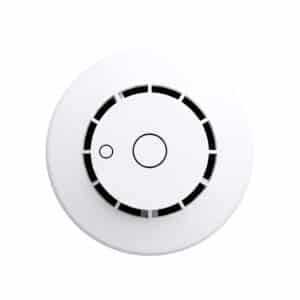
Within seconds, a smoke detector activates.
In one scenario, every connected device in the building emits a sound. The fire panel logs the event. The monitoring center receives a signal. In another scenario, a battery-powered unit emits a local sound while relaying a wireless alert via a gateway.
The difference is not theoretical. It reflects the type of smoke detection system installed.
In 2024, an estimated 119,500 non-residential structure fires occurred in the United States. Those incidents caused approximately 170 civilian deaths, more than 1,000 injuries, and $3.6 billion in direct property damage, according to the National Fire Protection Association. Non-residential occupancies represent a smaller share of total fires, yet the financial and operational impact is significant.
Property owners in Connecticut face a technical decision about smoke alarms. Should you install a hardwired smoke detector system or choose a wireless alternative? The answer affects code compliance, infrastructure requirements, monitoring capabilities, and long-term reliability.
This guide examines:
- How hardwired smoke alarms and detectors operate
- How wireless smoke detection systems communicate
- Installation differences and cost considerations
- Reliability and maintenance expectations
- Connecticut code requirements and inspection standards
- How to determine the right fire detection system solution for your property
A clear understanding of both systems supports a more confident and defensible decision.
How a Hardwired Smoke Detector System Works
A hardwired smoke detector connects directly to a building’s electrical system and typically integrates with a central fire alarm control panel.
Each detector receives continuous power from the facility’s electrical circuit. Most commercial units also include a backup battery to maintain operation during outages. Power redundancy supports code compliance and continuous monitoring.
Hardwired systems are designed to operate as networks. When one detector detects smoke, the signal travels through the panel. Connected alarms activate simultaneously across designated zones. The event is logged automatically. Monitoring services receive real-time notifications when the system is connected to a supervising station.
This architecture supports coordinated building-wide response.
1) System-Wide Communication
Commercial hardwired systems operate through supervised wiring circuits. The control panel constantly checks for faults, device removal, or wiring interruptions. Any break in the circuit triggers a trouble signal.
This supervision reduces the likelihood of silent failure.
Connected devices may include:
- Audible alarms
- Strobes
- Remote annunciators
- Elevator recall systems
- Emergency notification systems
Integration allows facilities to move beyond local alerting. The system becomes part of a broader life-safety infrastructure.
2) Compliance and Code Alignment in Connecticut
Many commercial and multi-tenant buildings in Connecticut require interconnected detection tied to a fire alarm control panel. NFPA 72 governs installation, supervision, and testing standards across the state.
Hardwired systems align naturally with these requirements. Panels record events, supervise circuits, and support annual inspection protocols required under the Connecticut fire code.
Documentation becomes straightforward. Inspectors can verify system health, device functionality, and signaling performance through panel logs and test results.
3) Reliability Considerations
Hardwired systems rely on physical wiring rather than radio communication. Signal transmission is stable and resistant to interference from structural materials or network congestion.
Battery maintenance remains necessary for backup power. Centralized supervision reduces the risk of unnoticed device failure.
For new construction and major renovations, hardwired smoke detector systems remain the standard approach in most commercial properties.
How Wireless Smoke Detection Systems Work
Wireless smoke detectors communicate via encrypted radio-frequency signals rather than physical wiring. Each device transmits alerts to a central panel or gateway, which then distributes the signal to other devices or monitoring services.
Power comes entirely from batteries. Most commercial-grade wireless detectors use long-life lithium batteries rated for several years of operation. Battery health becomes a core maintenance priority.
Modern wireless systems use mesh networking. Devices relay signals through one another to strengthen coverage and extend range. Proper placement and signal testing are critical during installation.
1) Installation Advantages
Wireless systems reduce installation disruption. No conduit runs through finished ceilings. No wall openings for new wiring paths.
This approach benefits:
- Historic buildings in Connecticut
- Occupied facilities that cannot pause operations
- Temporary structures
- Retrofit projects with limited infrastructure access
Deployment timelines are typically shorter. Labor costs are often lower at the outset.
2) Power and Maintenance Considerations
Battery dependency introduces operational responsibility. Low battery levels trigger supervisory alerts, but replacements must be scheduled and documented.
Facilities with dozens or hundreds of devices must maintain a clear battery management plan. Missed replacement cycles increase vulnerability.
Wireless systems also rely on signal integrity. Concrete walls, metal framing, and mechanical interference can affect performance. Professional site surveys help identify and correct these challenges before activation.
3) Integration and Monitoring
Modern wireless platforms can integrate with fire alarm panels and monitoring services. Network bridges or wireless gateways allow communication with broader life-safety systems.
Integration capability varies by manufacturer. Some systems support full panel logging and supervision. Others operate more independently.
Evaluation of compatibility with existing infrastructure becomes a must during system selection.
Hardwired Smoke Detector vs. Wireless: Key Differences
Both hardwired and wireless smoke detection systems meet life-safety objectives. The difference lies in infrastructure, maintenance responsibility, and how each system performs in specific building environments.
For commercial properties in Connecticut, the right choice often depends on code requirements, renovation scope, and long-term operational planning. The table below outlines the practical distinctions.
Hardwired Alarms vs. Wireless Smoke Detectors:
| Feature | Hardwired Smoke Detector | Wireless Smoke Detector |
| Power Source | Connected to the building electrical system with battery backup | Battery-powered only |
| Signal Transmission | Physical wiring through supervised circuits | Encrypted radio frequency signals |
| Installation Disruption | Requires cabling and electrical work | Minimal structural disruption |
| Upfront Cost | Higher labor costs in retrofit projects | Lower initial installation cost |
| Long-Term Maintenance | Battery backup replacement + panel inspection | Ongoing battery replacement schedule required |
| System Supervision | Continuous panel supervision of circuits and devices | Panel supervision + battery health alerts |
| Reliability Factors | Stable signal transmission through wiring | Dependent on signal strength and battery status |
| Best Fit For | New construction, major renovations, large facilities | Historic buildings, occupied retrofits, modular expansions |
| Code Alignment | Often preferred or required in commercial occupancies | Accepted in certain environments when compliant |
Hardwired systems prioritize structural stability and centralized supervision. Wireless systems prioritize flexibility and ease of deployment. Both can meet the Connecticut fire code when installed correctly. The decision should account for building type, inspection expectations, and the facility’s evolution over time.
Which Option Is Right for Your Property?
The right choice depends on infrastructure, occupancy type, and long-term operational plans.
1) Step #1: Start with Building Type
New construction and major renovations typically favor hard-wired smoke detector systems. Electrical pathways are accessible. Fire alarm panels are already part of the design. Interconnected supervision aligns cleanly with Connecticut’s commercial code requirements.
Existing buildings present a different equation.
Historic properties, fully occupied facilities, and retrofit environments often benefit from wireless systems. Installation disruption is lower. Deployment is faster. Structural modification is minimal.
2) Step #2: Consider Compliance Obligations
Many commercial occupancies in Connecticut require supervised detection tied to a fire alarm control panel under NFPA 72 and the state fire code. Schools, healthcare facilities, municipal buildings, and multi-tenant properties often fall into this category. In these cases, hardwired systems frequently provide the most direct path to compliance and inspection readiness.
Wireless systems can meet code when properly listed and engineered. Battery management and signal integrity must be documented and maintained consistently.
3) Step #3: Look at Operational Scale
Large facilities with centralized monitoring and integrated life-safety systems often benefit from hardwired infrastructure. Signal stability and panel supervision support long-term reliability.
Smaller buildings, modular expansions, and phased renovations may favor wireless deployment. Scalability and relocation flexibility offer practical advantages.
4) Step #4: Evaluate Long-Term Maintenance Tolerance
Hardwired systems require less frequent power-related maintenance but involve more infrastructure. Wireless systems reduce cabling but demand disciplined battery replacement schedules and periodic signal verification.
No system eliminates responsibility. Each system shifts it.
For many commercial properties in Connecticut, hardwired smoke detector systems remain the standard in larger, regulated environments. Wireless technology offers practical advantages in retrofit and specialty use cases.
The right decision aligns the building design, code requirements, and maintenance capacity with the selected detection method.
Frequently Asked Questions About Hardwired Smoke Detectors
1) Are hard-wired smoke detectors required in commercial buildings in Connecticut?
Many commercial occupancies in Connecticut must use interconnected smoke detection tied to a fire alarm control panel under NFPA 72 and the state fire code.
Requirements vary by occupancy type and building classification. Schools, healthcare facilities, and multi-tenant buildings often require supervised systems. A professional code review determines which requirements apply to your property.
2) Are hardwired smoke detectors more reliable than other smoke alarms, like wireless models?
Hard-wired smoke detectors use supervised wiring circuits and receive continuous electrical power with battery backup. This reduces dependency on battery life and radio signal strength.
Wireless systems can be reliable when professionally installed, but performance depends on signal integrity and battery maintenance.
3) How long do batteries last in wireless smoke detectors?
Commercial-grade wireless smoke detectors often use lithium batteries rated for three to five years. Actual lifespan depends on environmental conditions and usage.
Facilities must maintain a documented battery replacement schedule to remain compliant and avoid device failure.
4) Can wireless smoke detectors connect to a fire alarm panel?
Yes. Many commercial wireless systems integrate with fire alarm control panels through listed wireless gateways. Integration capability varies by manufacturer. System design must align with code requirements and inspection standards.
5) Is installation more expensive for hardwired smoke detectors?
Hardwired systems typically involve higher upfront labor costs in retrofit environments because wiring must be installed.
New construction projects often incorporate wiring during build-out, thereby reducing incremental costs. Wireless systems usually cost less to install initially but require ongoing battery maintenance.
6) How often must smoke detectors be inspected in Connecticut?
Connecticut follows NFPA 72 inspection standards. Most commercial systems require annual testing by qualified personnel. Documentation of inspection results must be maintained for review by local authorities.
Choose the Right System for Your Property
Hardwired smoke detector systems remain the standard in many commercial buildings across Connecticut. Wireless systems offer flexibility in retrofit environments and historic properties. The right choice for you depends on code requirements, infrastructure, and long-term maintenance capacity.
At AST, we evaluate your building, occupancy type, and compliance obligations before recommending a solution. The focus is on reliability under inspection and in real-world events.
If you are deciding between a hardwired smoke detector and a wireless system, schedule a consultation to review your property and requirements. Request a free quote!